
SEO Competitor Analysis Tool – Complete Professional Guide to Outrank Your Competition Search engine rankings are not won by guesswork. They are earned through research, strategy, and consistent optimization. One of the most powerful methods to improve organic traffic is…
SEO Competitor Analysis Tool – Complete Professional Guide to Outrank Your Competition
Search engine rankings are not won by guesswork. They are earned through research, strategy, and consistent optimization. One of the most powerful methods to improve organic traffic is performing structured SEO competitor analysis.
The SEO Competitor Analysis Tool by TaskHug helps website owners, bloggers, agencies, and businesses analyze competitor performance and uncover opportunities to gain higher rankings in Google search results.
Tool URL:
http://taskhug.com/tools/seo-tools/competitor-analysis
This guide explains what competitor analysis is, why it matters, how to use the tool effectively, and how to integrate it into a complete SEO strategy.
What Is SEO Competitor Analysis?
SEO competitor analysis is the process of examining websites that rank for the same keywords as your business. It helps you understand:
- Which keywords competitors are ranking for
- How their content is structured
- What backlinks they have
- Their technical SEO strength
- Where opportunities exist for your website
Instead of blindly creating content, competitor research allows you to make data-driven decisions.
Why SEO Competitor Analysis Is Important
Proper competitor analysis helps you:
- Discover high-traffic keywords
- Identify keyword gaps
- Improve content quality and depth
- Analyze backlink strategies
- Benchmark domain authority
- Detect SEO weaknesses in competing websites
If your competitor ranks above you, there is always a reason. The goal is to identify that reason and outperform them strategically.
How to Use the SEO Competitor Analysis Tool (Step-by-Step)
Access the tool here:
http://taskhug.com/tools/seo-tools/competitor-analysis
Follow these structured steps:
Step 1: Open the Tool Page
Visit the SEO Competitor Analysis Tool page on TaskHug.
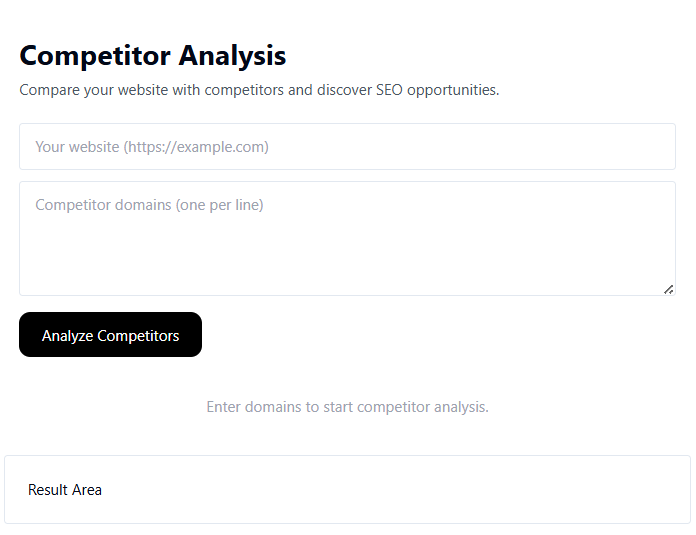
Step 2: Enter Competitor Website URL
Insert the full domain URL of your competitor.
Example format: https://example.com
Make sure the domain is correct and publicly accessible.
Step 3: Initiate Analysis
Click the Analyze button to start the evaluation process.
The tool will process available SEO data related to:
- Competitor domain performance
- Ranking keywords
- SEO strength indicators
- Visibility metrics
Step 4: Review SEO Insights
Once results appear, carefully analyze:
- Keyword positioning
- High-performing pages
- Authority signals
- Content patterns
Step 5: Compare With Your Website
Evaluate where your site stands compared to competitors.
Ask these questions:
- Are they ranking for keywords you are missing?
- Do they have more in-depth content?
- Do they cover topics you have not yet addressed?
- Do they appear technically stronger?
Step 6: Build an Action Plan
Use the findings to:
- Create improved content
- Target uncovered keyword gaps
- Strengthen internal linking
- Optimize existing pages
- Improve technical performance
Structured Competitor Research Framework
To maximize the results from the tool, follow this professional analysis structure:
1. Identify True SEO Competitors
Search your primary keywords in Google and identify domains consistently ranking on page one.
2. Analyze Keyword Strategy
Look for:
- High-volume keywords
- Long-tail keywords
- Informational vs transactional intent
- Keyword clusters
Then compare them to your keyword list.
You can refine your content strategy using the TaskHug Keyword Density Checker to optimize keyword placement within your pages.
3. Evaluate Content Quality
Check competitor content for:
- Word count depth
- Heading structure
- Use of FAQs
- Internal linking
- Topical coverage
If competitors provide more detailed content, you must create better and more structured resources.
4. Review Technical SEO Strength
Technical performance impacts rankings significantly.
You can improve your own site performance using:
- Website Page Speed Checker
- Sitemap Generator
- Google Index Checker
These tools ensure search engines crawl and index your content efficiently.
5. Study Backlink Signals
Backlinks remain a strong ranking factor.
After analyzing competitors, monitor your authority growth with:
- Backlink Checker
- Domain Authority Checker
If competitors have stronger backlinks, create outreach and content marketing strategies to close the gap.
6. Identify Content Gaps
Content gap analysis reveals topics competitors rank for that your website does not cover.
These uncovered topics become your next content opportunities.
Internal Linking Strategy for TaskHug
To maximize SEO authority and improve crawl depth, use this internal linking structure within your blog posts:
Primary Tool Link:
- SEO Competitor Analysis Tool
Supportive SEO Tools:
- Google Rank Tracker
- Keyword Density Checker
- Meta Tag Generator
- Backlink Checker
- Domain Authority Checker
- Google Index Checker
- Sitemap Generator
- Website Page Speed Checker
Link these contextually within relevant sections rather than placing them randomly. Use descriptive anchor text such as:
- analyze competitor keywords
- check backlink profile
- track search rankings
- optimize meta tags
This creates a strong topic cluster around SEO tools and strengthens TaskHug’s authority in the SEO niche.
Who Should Use This Tool?
The SEO Competitor Analysis Tool is ideal for:
- Bloggers
- SEO professionals
- Digital marketing agencies
- Small business owners
- Affiliate marketers
- E-commerce store owners
- Startup founders
Anyone aiming to increase organic traffic and outrank competitors can benefit from structured competitor research.
Advanced SEO Growth Strategy Using Competitor Data
Once you collect competitor insights:
- Target page-two competitor keywords first for faster wins.
- Improve content depth beyond competitors’ coverage.
- Optimize user experience and page speed.
- Strengthen internal linking.
- Track ranking improvements over time using a rank tracker.
SEO is not a one-time task. It is a continuous optimization cycle based on research and improvement.
Conclusion
The SEO Competitor Analysis Tool from TaskHug provides actionable insights that help you:
- Understand competitor strategies
- Discover keyword opportunities
- Improve content planning
- Strengthen technical SEO
- Develop smarter growth strategies
Instead of guessing what works, use competitor intelligence to build a data-driven SEO roadmap.
Start analyzing your competitors today at:
http://taskhug.com/tools/seo-tools/competitor-analysis
When used strategically alongside other TaskHug SEO tools, competitor analysis becomes the foundation of long-term organic growth.