
Full SEO Audit Tool – Complete Website SEO Analysis Guide Search engine optimization requires more than keyword research and content creation. To rank consistently in Google, your website must be technically sound, well-structured, optimized for performance, and free from critical…
Full SEO Audit Tool – Complete Website SEO Analysis Guide
Search engine optimization requires more than keyword research and content creation. To rank consistently in Google, your website must be technically sound, well-structured, optimized for performance, and free from critical SEO errors.
The Full SEO Audit Tool from TaskHug provides a comprehensive website analysis to help identify technical, on-page, and structural SEO issues that may be limiting your organic growth.
Tool URL:
http://taskhug.com/tools/seo-tools/seo-audit
This guide explains what an SEO audit is, why it is essential, and how to use the tool effectively to improve your website rankings.
What Is a Full SEO Audit?
A full SEO audit is a complete evaluation of a website’s search engine performance. It identifies weaknesses that prevent a website from ranking higher in search results.
An SEO audit typically analyzes:
- On-page SEO factors
- Technical SEO issues
- Website structure
- Crawlability and indexability
- Page speed performance
- Mobile responsiveness
- Internal linking
- Broken links
- Metadata optimization
Regular SEO audits ensure your website remains competitive and search engine friendly.
Why an SEO Audit Is Important
Conducting a full SEO audit helps you:
- Identify ranking barriers
- Fix technical issues
- Improve page speed
- Optimize meta tags
- Strengthen internal linking
- Improve crawl efficiency
- Enhance user experience
- Increase organic traffic
Without an audit, SEO improvements are often based on assumptions rather than data.
How to Use the Full SEO Audit Tool (Step-by-Step)
Access the tool here:
http://taskhug.com/tools/seo-tools/seo-audit
Follow these structured steps:
Step 1: Open the Full SEO Audit Tool
Visit the TaskHug SEO Audit page in your browser.
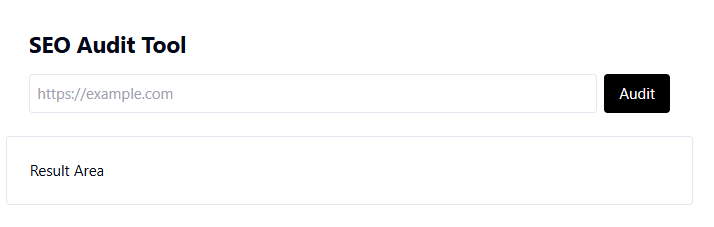
Step 2: Enter Your Website URL
Input your full domain URL in the provided field.
Example format:
https://yourwebsite.com
Ensure the domain is correct and accessible.
Step 3: Start the SEO Audit
Click the “Analyze” or “Start Audit” button.
The tool will begin scanning your website for SEO-related issues.
Step 4: Audit Processing
The tool evaluates multiple SEO factors, including:
- Title tags and meta descriptions
- Header tag structure (H1, H2, H3)
- Keyword presence
- Internal and external links
- Broken links
- Page load speed
- Mobile compatibility
- Sitemap presence
- Robots.txt configuration
- Indexing status
Step 5: Review the Audit Report
After analysis, you will receive a detailed SEO report that may include:
- Overall SEO score
- Critical issues
- Warnings
- Optimization suggestions
- Technical recommendations
Carefully review each section.
Step 6: Fix Identified Issues
Address problems in order of priority:
High Priority Fixes:
- Missing title tags
- Duplicate meta descriptions
- Broken internal links
- Slow page speed
- Non-mobile-friendly layout
- Crawl errors
Medium Priority Fixes:
- Thin content
- Missing alt attributes
- Improper heading hierarchy
Low Priority Fixes:
- Minor optimization suggestions
Step 7: Re-run the Audit
After making corrections, run the Full SEO Audit Tool again to confirm improvements.
Regular audits ensure continuous optimization.
Professional SEO Audit Framework
To maximize results, follow this structured audit process:
1. On-Page SEO Analysis
Evaluate:
- Keyword optimization
- Title tag length
- Meta description clarity
- Heading structure
- Content depth
Use the Keyword Density Checker and Meta Tag Generator from TaskHug to refine on-page elements.
2. Technical SEO Evaluation
Review:
- Page speed
- Mobile responsiveness
- HTTPS security
- XML sitemap
- Robots.txt file
- Crawl errors
You can improve technical performance using:
- Website Page Speed Checker
- Sitemap Generator
- Google Index Checker
3. Internal Linking Review
Strong internal linking improves SEO authority distribution.
Use:
- Broken Link Checker to fix dead links
- Structured linking between related pages
- Descriptive anchor text
4. Backlink & Authority Assessment
Analyze domain strength and backlink profile using:
- Backlink Checker
- Domain Authority Checker
A strong backlink profile supports higher rankings.
5. Competitor Benchmarking
Compare your SEO performance with competitors using:
- SEO Competitor Analysis Tool
Identify areas where competitors outperform you and close the gap.
Internal Linking Strategy for TaskHug
To strengthen topical authority, integrate the Full SEO Audit Tool with other TaskHug SEO tools.
Primary Tool:
- Full SEO Audit Tool
Supporting Tools:
- SEO Competitor Analysis Tool
- Google Rank Tracker
- Broken Link Checker
- Schema Markup Generator
- Keyword Density Checker
- Meta Tag Generator
- Backlink Checker
- Domain Authority Checker
- Sitemap Generator
- Google Index Checker
- Website Page Speed Checker
- YouTube SEO Optimizer
Use contextual anchor phrases such as:
- perform full website audit
- check broken links
- analyze competitor SEO
- generate structured data
- track keyword rankings
- optimize meta tags
- improve technical SEO
This creates a strong SEO topic cluster and improves internal PageRank distribution.
Who Should Use the Full SEO Audit Tool?
This tool is ideal for:
- Bloggers
- SEO professionals
- Digital marketers
- Agencies
- eCommerce stores
- Corporate websites
- Startup founders
- Local businesses
Anyone serious about improving organic rankings should conduct regular SEO audits.
Advanced SEO Growth Strategy Using Audit Data
After completing your audit:
- Fix technical errors first.
- Optimize metadata and on-page content.
- Improve page speed and mobile experience.
- Strengthen internal linking.
- Build high-quality backlinks.
- Track ranking improvements consistently.
- Re-audit monthly to maintain performance.
SEO is an ongoing optimization cycle.
Conclusion
The TaskHug Full SEO Audit Tool provides a structured, data-driven approach to identifying and fixing website SEO issues.
It helps you:
- Detect technical errors
- Improve on-page optimization
- Strengthen site structure
- Enhance crawlability
- Increase organic search performance
Start auditing your website today:
http://taskhug.com/tools/seo-tools/seo-audit
When combined with other TaskHug SEO tools, a full audit becomes the foundation of long-term search engine growth and digital success.