
AI Keyword Clustering Tool – Smart Keyword Grouping for Advanced SEO Strategy Keyword research alone is not enough in modern SEO. To rank effectively, you must organize keywords based on search intent, topic relevance, and semantic relationships. That’s where an…
AI Keyword Clustering Tool – Smart Keyword Grouping for Advanced SEO Strategy
Keyword research alone is not enough in modern SEO. To rank effectively, you must organize keywords based on search intent, topic relevance, and semantic relationships. That’s where an AI Keyword Clustering Tool becomes essential.
The AI Keyword Clustering Tool at
http://taskhug.com/tools/seo-tools/keyword-cluster
helps you automatically group related keywords into logical clusters so you can build stronger topical authority and rank higher in search engines.
This professional guide explains what keyword clustering is, why it matters, and how to use the TaskHug tool step by step for maximum SEO growth.
What is AI Keyword Clustering?
AI keyword clustering is the process of grouping related keywords into structured topic clusters using artificial intelligence and semantic analysis.
Instead of targeting individual keywords randomly, clustering allows you to:
- Organize keywords by search intent
- Build topic-based content silos
- Improve internal linking structure
- Strengthen topical authority
- Increase ranking potential
Search engines reward websites that demonstrate deep coverage of a topic. Keyword clustering makes that possible.
Why Keyword Clustering is Important for SEO
Modern search algorithms analyze context and semantic relationships between keywords. When you structure content using clusters:
- You improve keyword coverage
- You avoid keyword cannibalization
- You enhance content depth
- You build authority around a niche topic
- You increase organic visibility
Without clustering, content strategy becomes scattered. With clustering, it becomes structured and scalable.
How to Use TaskHug AI Keyword Clustering Tool (Step-by-Step Guide)
Follow these steps to generate smart keyword clusters:
Step 1: Visit the Tool Page
Open the official tool:
http://taskhug.com/tools/seo-tools/keyword-cluster
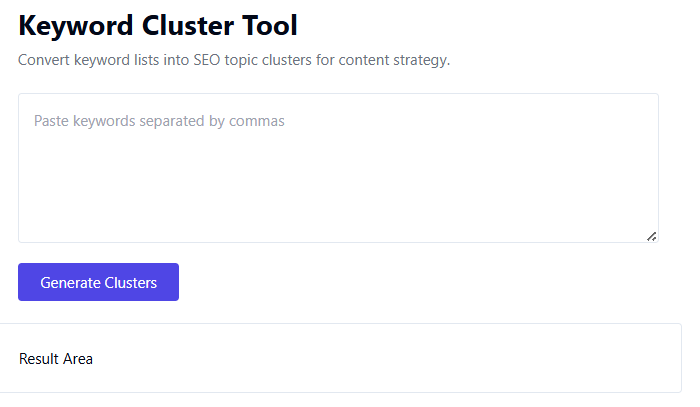
Step 2: Enter Your Target Keywords
Paste a list of keywords (one per line or comma-separated) into the input field.
You can export keywords from your research tools or from competitor analysis.
Step 3: Select Clustering Mode
Choose clustering depth or grouping preferences (if available).
Step 4: Click “Cluster Keywords”
Start the AI clustering process.
Step 5: Review Generated Clusters
The tool will organize keywords into:
- Primary topic clusters
- Sub-topic groups
- Search intent categories
- Related keyword segments
Step 6: Export and Build Content Strategy
Use the clusters to:
- Create pillar pages
- Develop supporting blog posts
- Improve website structure
- Plan internal linking
- Avoid keyword overlap
This structured method ensures strategic SEO execution instead of random content publishing.
How to Implement Keyword Clusters on Your Website
Once you generate clusters:
1. Create Pillar Content
Develop one comprehensive page targeting the main cluster keyword.
2. Create Supporting Articles
Write detailed posts for sub-cluster keywords and link them back to the pillar page.
3. Strengthen Internal Linking
Connect related articles naturally within your content.
4. Optimize Technical SEO
Use TaskHug tools like:
- Full SEO Audit Tool
http://taskhug.com/tools/seo-tools/seo-audit - Website Health Checker
http://taskhug.com/tools/seo-tools/website-health-checker - Google Rank Tracker
http://taskhug.com/tools/seo-tools/google-rank-tracker - Content Gap Analyzer
http://taskhug.com/tools/seo-tools/content-gap-analyzer
Combining clustering with these tools creates a complete SEO workflow.
Best Practices for Keyword Clustering
To maximize performance:
- Group keywords by search intent (informational, transactional, navigational)
- Prioritize long-tail keywords for faster ranking
- Avoid overlapping clusters
- Maintain logical internal linking
- Update clusters periodically based on ranking data
- Track results using rank tracking tools
Strategic clustering improves both content quality and technical SEO performance.
Internal Linking Strategy for TaskHug
To strengthen domain authority and SEO structure:
1. Connect All SEO Tools
Each SEO guide should link to related tools such as:
- AI Keyword Clustering Tool
- Content Gap Analyzer
- Google Rank Tracker
- SEO Competitor Analysis Tool
- Google SERP Analyzer
- Website Traffic Estimator
- Backlink Checker
- Domain Authority Checker
- Broken Link Checker
- Schema Markup Generator
2. Promote Utility Tools Within Relevant Context
You can naturally promote other TaskHug tools like:
- Image Compressor (optimize blog visuals)
- Video Trimmer (optimize video content)
- YouTube SEO Optimizer (for video creators)
- EMI Calculator (finance content creators)
- BMI Calculator (health niche bloggers)
This builds topic clusters across your entire website, not just SEO tools.
3. Use Strategic Anchor Text
Examples:
- “cluster related keywords automatically”
- “analyze content gaps”
- “track keyword rankings”
- “improve website health”
Avoid generic anchors such as “click here”.
Who Should Use AI Keyword Clustering Tool?
This tool is ideal for:
- SEO professionals
- Content strategists
- Bloggers
- Affiliate marketers
- E-commerce businesses
- Digital marketing agencies
- Website owners
If you publish content regularly, keyword clustering should be part of your SEO strategy.
Common Mistakes to Avoid
- Targeting single keywords without grouping
- Ignoring search intent
- Creating multiple pages for similar keywords
- Not linking cluster pages internally
- Skipping rank tracking after publishing
Structured SEO always outperforms scattered content strategies.
How AI Clustering Improves Rankings
When you implement keyword clusters correctly:
- Your topical authority increases
- Your pages rank for multiple related keywords
- Your internal linking becomes stronger
- Your crawl structure improves
- Your organic traffic grows consistently
It transforms SEO from guesswork into a scalable growth system.
Conclusion
The AI Keyword Clustering Tool is more than a keyword organizer. It is a strategic framework for building authority, improving rankings, and scaling organic traffic.
Start structuring your content intelligently using the free tool at:
http://taskhug.com/tools/seo-tools/keyword-cluster
Combine clustering with other TaskHug SEO tools and productivity tools to create a complete optimization ecosystem for long-term digital growth.