
AI Content Detector – Identify AI-Generated Text with Accuracy With the rapid growth of AI writing tools, verifying whether content is AI-generated or human-written has become essential for SEO, academic integrity, and publishing standards. The TaskHug AI Content Detector helps…
AI Content Detector – Identify AI-Generated Text with Accuracy
With the rapid growth of AI writing tools, verifying whether content is AI-generated or human-written has become essential for SEO, academic integrity, and publishing standards. The TaskHug AI Content Detector helps you analyze text and detect AI-generated patterns quickly and efficiently. Access the tool here: http://taskhug.com/tools/seo-tools/ai-content-detector This guide explains what an AI content detector is, why it matters, and how to use the TaskHug AI Content Detector effectively.
What Is an AI Content Detector?
An AI Content Detector is a tool that analyzes text patterns, structure, predictability, and language signals to estimate whether content was generated by artificial intelligence tools. It evaluates writing style and linguistic patterns to provide detection insights.
Why AI Content Detection Matters
Search engines prioritize helpful, high-quality content. While AI tools can assist in content creation, unedited AI-generated text may lack originality, depth, and human nuance. AI detection helps maintain content authenticity, ensure editorial quality, verify academic submissions, improve trust and transparency, and reduce risks of publishing low-quality automated text.
Features of TaskHug AI Content Detector
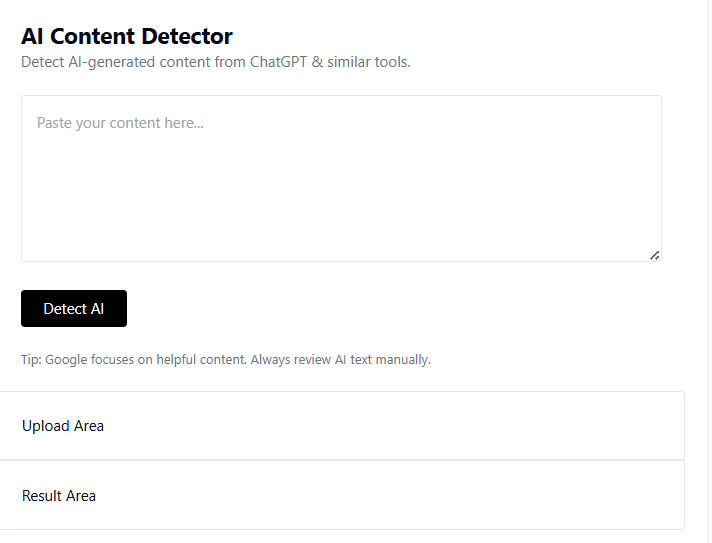
The TaskHug AI Content Detector allows you to paste content directly into the input field, analyze AI-generated probability instantly, view results in the result area, and review detection feedback for content improvement. The interface is simple and designed for bloggers, educators, SEO professionals, agencies, and website owners.
How to Use the AI Content Detector (Based on Your Tool Interface)
Step 1: Paste Your Content. In the large text box labeled “Paste your content here,” enter the article, blog post, academic text, or webpage content you want to analyze.
Step 2: Click Detect AI. Press the “Detect AI” button to begin analysis.
Step 3: Review Results. The tool will display detection insights in the “Result Area,” helping you understand whether the content appears AI-generated or human-written.
Step 4: Improve Content Quality. If AI probability is high, manually edit the content to improve originality, add personal insights, include real-world examples, and enhance human tone.
Best Practices for Publishing AI-Assisted Content
Always review AI-generated text manually, add unique insights and personal expertise, improve sentence variation, include credible references where necessary, and focus on user intent and value. Google focuses on helpful content rather than purely AI detection, so quality and usefulness remain the priority.
Common Mistakes to Avoid
Avoid publishing raw AI-generated content without editing, ignoring readability improvements, over-optimizing with repetitive keywords, relying solely on automation for long-form articles, and neglecting fact-checking. AI should assist content creation, not replace editorial review.
Who Should Use This Tool?
The TaskHug AI Content Detector is ideal for bloggers, content marketers, academic institutions, teachers, students, SEO professionals, agencies, and publishers who need to verify content authenticity before publication.
Conclusion
As AI writing tools continue to evolve, maintaining content authenticity and editorial quality becomes increasingly important. The TaskHug AI Content Detector provides a fast and reliable way to analyze text and improve content standards. Use it to refine AI-assisted writing and ensure your content remains trustworthy, valuable, and optimized for search engines. Start analyzing your content today at http://taskhug.com/tools/seo-tools/ai-content-detector and maintain high publishing standards with confidence.