
Affiliate SEO Analyzer – Optimize Affiliate Websites for Higher Rankings & Conversions Affiliate marketing is highly competitive. Ranking for buyer-intent keywords requires strong on-page SEO, content optimization, and technical performance. An Affiliate SEO Analyzer helps you evaluate affiliate pages, identify…
Affiliate SEO Analyzer – Optimize Affiliate Websites for Higher Rankings & Conversions
Affiliate marketing is highly competitive. Ranking for buyer-intent keywords requires strong on-page SEO, content optimization, and technical performance. An Affiliate SEO Analyzer helps you evaluate affiliate pages, identify SEO weaknesses, and improve ranking potential.
The Affiliate SEO Analyzer Tool at
http://taskhug.com/tools/seo-tools/affiliate-seo
is designed to help affiliate marketers analyze SEO performance, detect optimization gaps, and improve visibility in search engines.
This professional guide explains what affiliate SEO analysis is, why it matters, and how to use the TaskHug tool step by step for better rankings and higher conversions.
What is Affiliate SEO Analysis?
Affiliate SEO analysis evaluates how well an affiliate website or product page is optimized for search engines.
It checks key SEO elements such as:
- On-page optimization
- Keyword usage
- Meta title and description
- Heading structure
- Content depth
- Internal linking
- Technical SEO signals
- Page performance factors
The goal is to improve search rankings while maintaining high conversion potential.
Why Affiliate SEO is Different
Affiliate websites face unique challenges:
- High competition for buyer keywords
- Strict quality standards
- Thin content risks
- Duplicate content issues
- Commercial intent targeting
An Affiliate SEO Analyzer helps ensure your content meets search engine expectations while staying conversion-focused.
How to Use TaskHug Affiliate SEO Analyzer (Step-by-Step Guide)
Follow these steps to analyze your affiliate page effectively:
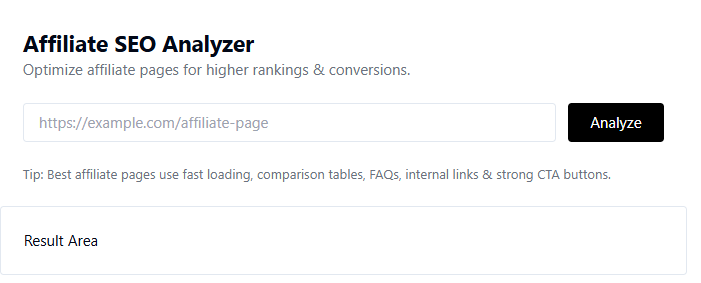
Step 1: Visit the Tool Page
Open the official tool:
http://taskhug.com/tools/seo-tools/affiliate-seo
Step 2: Enter Your Affiliate Page URL
Input the full URL of the product review, comparison page, or affiliate landing page.
Step 3: Add Target Keyword (Optional if available)
Enter your primary keyword for better analysis accuracy.
Step 4: Click “Analyze”
Start the SEO audit process.
Step 5: Review the SEO Report
The tool evaluates:
- Title and meta optimization
- Keyword placement
- Content structure
- Heading hierarchy
- Internal linking
- SEO score overview
- Improvement suggestions
Step 6: Implement Recommended Fixes
Optimize your page by:
- Improving keyword density naturally
- Expanding content depth
- Strengthening internal links
- Improving headings and readability
- Enhancing technical structure
Repeat the analysis after optimization to track improvements.
Key Metrics to Focus On
When reviewing your affiliate SEO report, prioritize:
- Proper keyword targeting
- Search intent alignment
- Content originality
- Structured headings (H1, H2, H3)
- Internal link optimization
- Clear call-to-action placement
Combining SEO with conversion optimization is essential for affiliate success.
Best Practices for Affiliate SEO Success
To maximize affiliate rankings:
- Target long-tail buyer keywords
- Add comparison tables and detailed reviews
- Use schema markup for product pages
- Build authority through content depth
- Optimize images for performance
- Update content regularly
You can strengthen optimization using additional TaskHug tools:
- Full SEO Audit Tool
http://taskhug.com/tools/seo-tools/seo-audit - Content Gap Analyzer
http://taskhug.com/tools/seo-tools/content-gap-analyzer - AI Keyword Clustering Tool
http://taskhug.com/tools/seo-tools/keyword-cluster - Google Rank Tracker
http://taskhug.com/tools/seo-tools/google-rank-tracker - Website Health Checker
http://taskhug.com/tools/seo-tools/website-health-checker
Using these tools together builds a complete affiliate SEO system.
Internal Linking Strategy for TaskHug
To maximize SEO authority across TaskHug:
1. Connect All SEO Tools
Interlink:
- Affiliate SEO Analyzer
- SEO Competitor Analysis Tool
- Google SERP Analyzer
- Website Traffic Estimator
- Backlink Checker
- Domain Authority Checker
- Broken Link Checker
- Schema Markup Generator
- YouTube SEO Optimizer
2. Promote Utility Tools Naturally
Within affiliate-related blog content, include contextual links to:
- Image Compressor (optimize product images)
- Video Trimmer (edit product demo videos)
- EMI Calculator (finance niche affiliates)
- BMI Calculator (health niche affiliates)
This creates cross-category topical clusters and improves crawl depth.
3. Use SEO-Friendly Anchor Text
Examples:
- “analyze affiliate page SEO”
- “perform affiliate SEO audit”
- “optimize product review content”
- “track affiliate keyword rankings”
Avoid generic linking phrases.
Who Should Use Affiliate SEO Analyzer?
This tool is ideal for:
- Affiliate marketers
- Niche bloggers
- Review site owners
- E-commerce affiliates
- Comparison website owners
- Digital marketing agencies
If you rely on organic traffic for commissions, this tool is essential.
Common Affiliate SEO Mistakes to Avoid
- Thin product descriptions
- Over-optimized keyword stuffing
- Poor internal linking
- Weak meta titles
- Ignoring technical SEO
- Copying manufacturer content
Search engines reward helpful, well-structured, and authoritative content.
How Affiliate SEO Optimization Improves Revenue
When you optimize affiliate pages properly:
- You rank higher for buyer keywords
- You increase targeted traffic
- You improve click-through rate
- You build topical authority
- You generate more affiliate commissions
SEO and revenue growth go hand in hand.
Conclusion
The Affiliate SEO Analyzer is a strategic tool for affiliate marketers who want better rankings and higher conversions.
Start optimizing your affiliate pages using the free tool at:
http://taskhug.com/tools/seo-tools/affiliate-seo
Combine it with other TaskHug SEO and productivity tools to create a powerful optimization ecosystem that drives consistent organic traffic and affiliate revenue growth.