
AI SEO Content Writer – Create Optimized Content That Ranks High-quality, search-optimized content is the foundation of organic growth. However, writing SEO-focused articles consistently can be time-consuming. An AI SEO Content Writer helps generate structured, keyword-optimized content that aligns with…
AI SEO Content Writer – Create Optimized Content That Ranks
High-quality, search-optimized content is the foundation of organic growth. However, writing SEO-focused articles consistently can be time-consuming. An AI SEO Content Writer helps generate structured, keyword-optimized content that aligns with search intent and ranking best practices.
The AI SEO Content Writer Tool at
http://taskhug.com/tools/seo-tools/ai-content-writer
is designed to help bloggers, marketers, businesses, and agencies create SEO-friendly content efficiently.
This professional guide explains what an AI SEO writer is, why it matters, and how to use the TaskHug tool step by step.
What is an AI SEO Content Writer?
An AI SEO Content Writer is a tool that generates structured content optimized for search engines based on:
- Target keywords
- Search intent
- Topic relevance
- Heading structure
- Semantic keyword usage
- Readability optimization
It helps users create:
- Blog posts
- Landing pages
- Affiliate content
- Product descriptions
- Service pages
- SEO-optimized articles
The goal is to balance content quality with ranking potential.
Why AI SEO Writing is Important
Modern search engines evaluate:
- Content depth
- Topical authority
- Keyword relevance
- User intent satisfaction
- Content structure
An AI SEO writer helps ensure your content includes the necessary elements for improved visibility while maintaining clarity and engagement.
How to Use TaskHug AI SEO Content Writer (Step-by-Step Guide)
Follow these steps to generate optimized content:
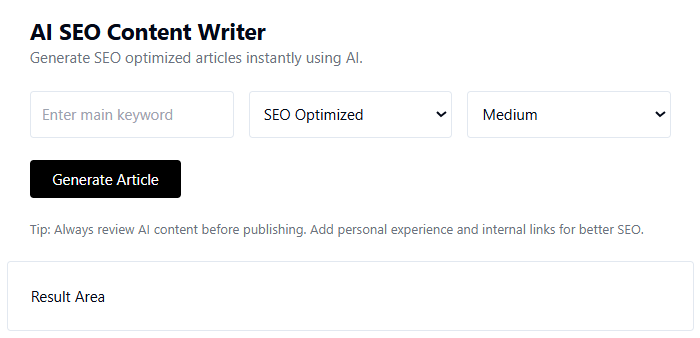
Step 1: Visit the Tool Page
Open the official tool:
http://taskhug.com/tools/seo-tools/ai-content-writer
Step 2: Enter Your Target Keyword
Provide the primary keyword or topic you want to rank for.
Example: “best digital marketing strategies” or “home workout plan”.
Step 3: Select Content Type
Choose the type of content you want to generate, such as:
- Blog article
- Product page
- Landing page
- SEO guide
Step 4: Define Content Length or Depth
Select word count preference or content detail level (if available).
Step 5: Click “Generate Content”
Start the AI content creation process.
Step 6: Review and Optimize
After generation:
- Adjust tone if needed
- Add internal links
- Insert relevant examples
- Optimize meta title and description
- Check readability and flow
For best results, combine AI generation with human refinement.
Best Practices for AI-Generated SEO Content
To maximize rankings:
- Focus on search intent
- Add real examples and insights
- Include structured headings (H1, H2, H3)
- Optimize internal linking
- Avoid keyword stuffing
- Update content regularly
You can enhance your content strategy using other TaskHug SEO tools:
- AI Keyword Clustering Tool
http://taskhug.com/tools/seo-tools/keyword-cluster - Content Gap Analyzer
http://taskhug.com/tools/seo-tools/content-gap-analyzer - Google Rank Tracker
http://taskhug.com/tools/seo-tools/google-rank-tracker - Internal Link Builder
http://taskhug.com/tools/seo-tools/internal-link-builder - Full SEO Audit Tool
http://taskhug.com/tools/seo-tools/seo-audit
Using these tools together ensures your content is optimized from research to ranking.
How AI SEO Content Writer Supports Content Strategy
A structured SEO workflow looks like this:
- Research keywords using clustering and gap analysis.
- Generate optimized content using AI SEO Content Writer.
- Improve internal linking with Internal Link Builder.
- Track rankings using Google Rank Tracker.
- Monitor site health using Website Health Checker.
This integrated strategy improves consistency and scalability.
Internal Linking Strategy for TaskHug
To strengthen SEO authority across TaskHug:
1. Interlink All SEO Tools
Each SEO tool page should link to:
- AI SEO Content Writer
- AI Keyword Clustering Tool
- Content Gap Analyzer
- Google Rank Tracker
- Local SEO Rank Tracker
- SEO Competitor Analysis Tool
- Google SERP Analyzer
- Affiliate SEO Analyzer
- Programmatic SEO Page Generator
- Internal Link Builder
This builds a strong SEO-focused content cluster.
2. Promote Utility Tools Contextually
Within content creation guides, naturally link to:
- Image Compressor (optimize blog visuals)
- Video Trimmer (edit video content)
- YouTube SEO Optimizer (optimize YouTube descriptions and titles)
- EMI Calculator (finance niche blog content)
- BMI Calculator (health niche blog content)
This enhances cross-category relevance and improves crawl depth.
3. Use Strategic Anchor Text
Examples:
- “generate SEO-optimized articles”
- “create keyword-focused blog content”
- “analyze content gaps”
- “track keyword rankings”
Avoid generic anchor phrases.
Who Should Use AI SEO Content Writer?
This tool is ideal for:
- Bloggers
- Affiliate marketers
- SEO professionals
- Content agencies
- E-commerce businesses
- SaaS companies
- Digital marketing teams
If you publish content regularly, AI-assisted SEO writing can improve efficiency and scalability.
Common Mistakes to Avoid
- Publishing AI content without review
- Ignoring search intent
- Not adding internal links
- Skipping technical SEO checks
- Overusing keywords unnaturally
AI should enhance your strategy, not replace quality control.
How AI SEO Writing Improves Rankings
When used strategically:
- You publish optimized content faster
- You increase keyword coverage
- You improve topical authority
- You maintain structured formatting
- You scale content production efficiently
Consistent, optimized publishing drives long-term organic growth.
Conclusion
The AI SEO Content Writer is a powerful solution for creating structured, keyword-optimized content that aligns with modern search engine requirements.
Start generating SEO-friendly content today using:
http://taskhug.com/tools/seo-tools/ai-content-writer
Combine it with other TaskHug SEO and productivity tools to build a complete, scalable content optimization ecosystem that drives consistent traffic and long-term growth.